Fragile
by Yes
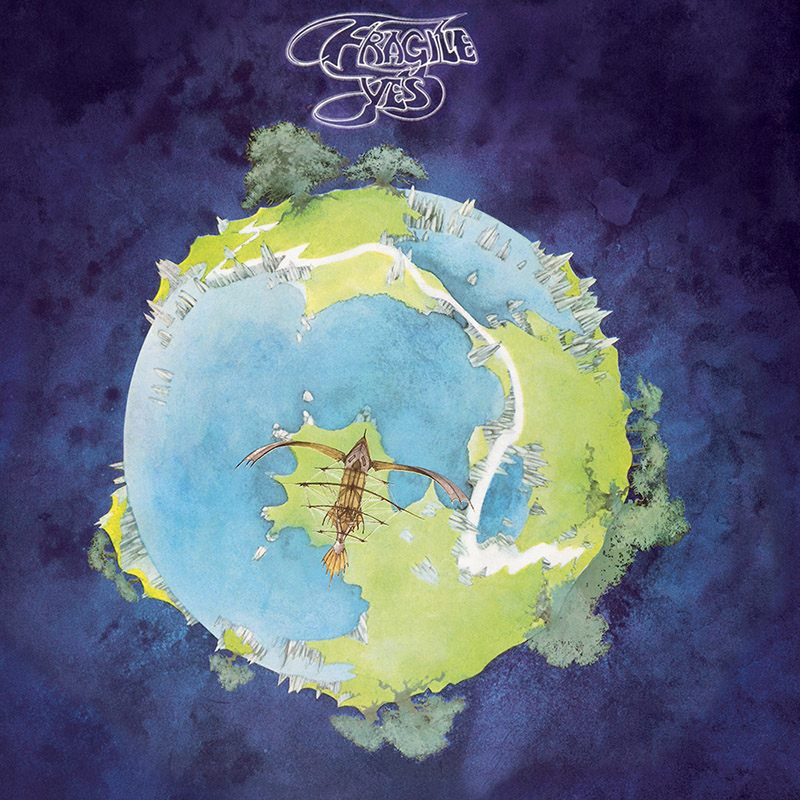
Review
Track by Track
Roundabout
It’s a cool and atmospheric start, with a delicate build and then: Bam! In they come. The bass is delicious in particular, but the vocal work is really hooky too. They go off on plenty of detours, but there is a coherent string that ties everything together really nicely. There’s so much rhythmical texture from across the group, and even for a nearly nine minute song they cram an awful lot in. Brilliant organ soloing from Rick Wakeman, bounced back and forward against the bass and guitar work beautifully. It’s kind of mad that they manage to weave something this broad and musically intense into something that’s got such a poppy side to it, but the balance is top notch. What an opener.
Cans And Brahms (Extracts From Brahms' 4th Symphony In E Minor, Third Movement)
And how do you follow that? With an electronic interpretation of a minute and a half of a Brahms symphony, of course. It’s well executed and, with the technology available at the time, apparently took 15 hours to record, but while it’s interesting enough, it doesn’t really do anything for me. Apparently Rick Wakeman called it “dreadful”.
We Have Heaven
Jon Anderson’s go now and we get a thickly layered vocal work that’s a pretty interesting piece of studio work. The building layers create a cool harmonic bed that builds a fairly hypnotic repetition and checks out before it has time to become too much. Pretty nice.
South Side Of The Sky
And now we’re cooking with another full band effort. It’s got great groove and some fantastic proggy riffs. They work really well with developing dynamic range and working in different movements over the course of the song. It feels a bit less coherently focused than Roundabout, but there’s still a lot to like about this. There’s so much studio work going on that I was wondering how they’d do it live. Apparently they didn’t in its entirety until 2002! There are some brilliant riffs in here and, while I feel the momentum got a little lost in the middle, the other sections are really excellent.
Five Per Cent For Nothing
This is brilliant and bonkers. How much can they cram into 35 seconds? A lot. This was drummer Bill Bruford’s first composition. Had to be one by the drummer, didn’t it? Great stuff.
Long Distance Runaround
This is good fun too. Some cool, rambling prog riffs, but again, they focus back in on a fairly stable centre, while allowing for plenty of noodly work around the edges. The staccato nature of the rhythms are cool, and it’s a really coherent and musically interesting piece even while it takes the time to be a bit more freeform.
The Fish (Schindleria Praematurus)
The last one runs really nicely into this one. It’s a bit more roaming and unfocused, with a lot of bass work going on. The vibe is good, and it’s interesting, if ultimately a touch unsatisfying and lacking in significant development.
Mood For A Day
Steve Howe’s turn for a track now and it’s a classical/flamenco inspired effort. It’s quite a pretty effort, although it does feel a tiny bit scruffy in places. I think thematically, it perhaps doesn’t really fit in with a lot of the other work, but it’s a nice palate cleanser before the closing track.
Heart Of The Sunrise
A lovely atmospheric build to this with some super cool bass riff work. It’s quite heavy in places, but they break up the fast flurries with brief moments of calm that allow the intensity to ramp up and drop down and create a nice dynamic flow to the track. The drop out to the vocal section is very pretty and adds a nice variation that they slowly climb back from with some suitably weird proggy riffs that increase an edge of tension nicely. The subtle synth work is great in that section too. Then they get stuck back in with the fast and furious prog riff explosion, before combining the two worlds in the final section. There’s some very nice piano work in there, but they don’t shy away from throwing slightly obtuse riffs in there too. I think this one was probably more interesting than affecting, but I enjoyed it regardless. And then there’s a little reprise of We Have Heaven as a secret track.